Ontario Hood Cleaning
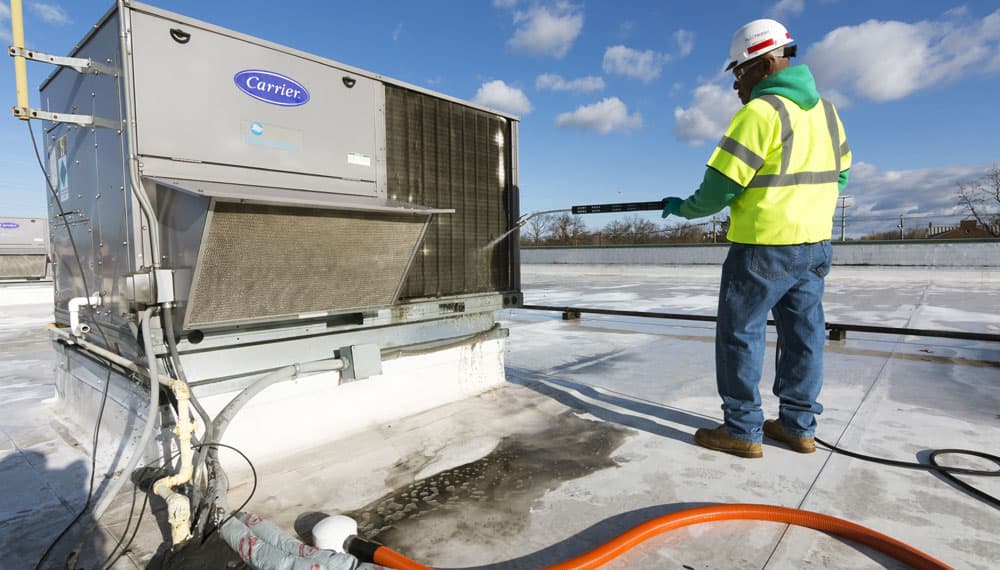
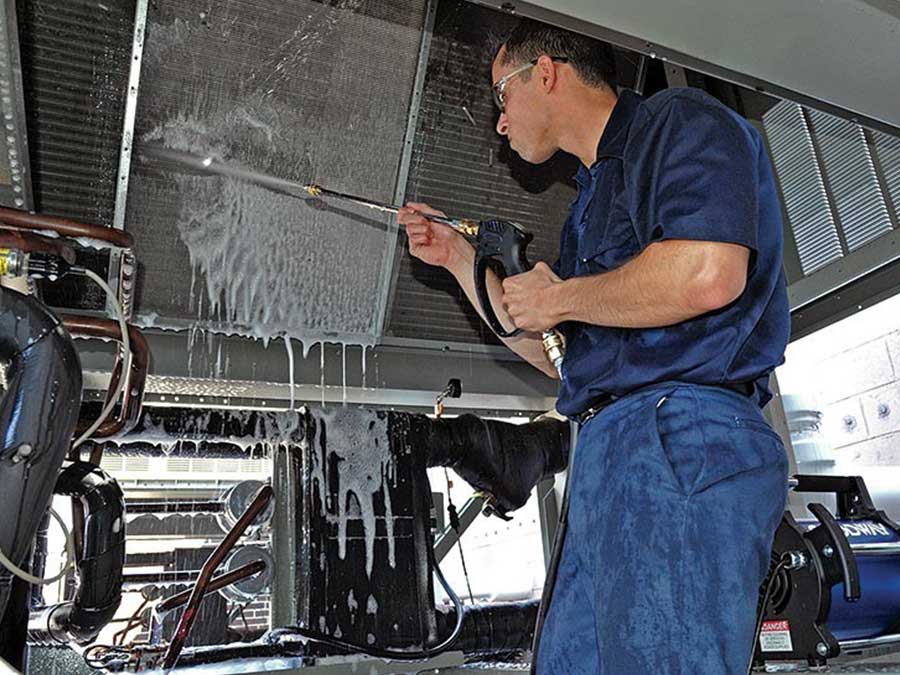
Technician cleaning commercial HVAC condenser coils on rooftop unit

HVAC Coil Cleaning in Ontario

Dirty coils make your HVAC system work harder, use more electricity, and fail sooner. A layer of grease just 1/16" thick reduces heat transfer by 21%. Ontario Hood Cleaning cleans evaporator and condenser coils to restore designed efficiency—lowering your energy bills and extending equipment life.

All Coil Types
Quick Service
Free quotes

Get a Fast Quote

You’ll hear back in under 2 hours.

The Hidden Cost of Dirty Coils

HVAC coils are heat exchangers. They work by transferring thermal energy between refrigerant and air. When coils get dirty, that transfer becomes inefficient. Your system runs longer cycles, uses more energy, and can't maintain target temperatures.

Commercial kitchens make coils dirty fast. Grease vapor, kitchen exhaust, and airborne particles coat coil surfaces and clog fins. Ontario Hood Cleaning provides professional coil cleaning for all commercial HVAC and refrigeration equipment. We use appropriate cleaning methods for each coil type—protecting fins while removing all contamination. The result: restored efficiency, lower energy costs, and equipment that lasts.

Coils We Clean

  • Rooftop unit condenser coils
  • Air handler evaporator coils
  • Make-up air unit coils
  • Walk-in cooler evaporator coils
  • Walk-in freezer coils
  • Reach-in refrigerator and freezer coils
  • Ice machine condenser coils
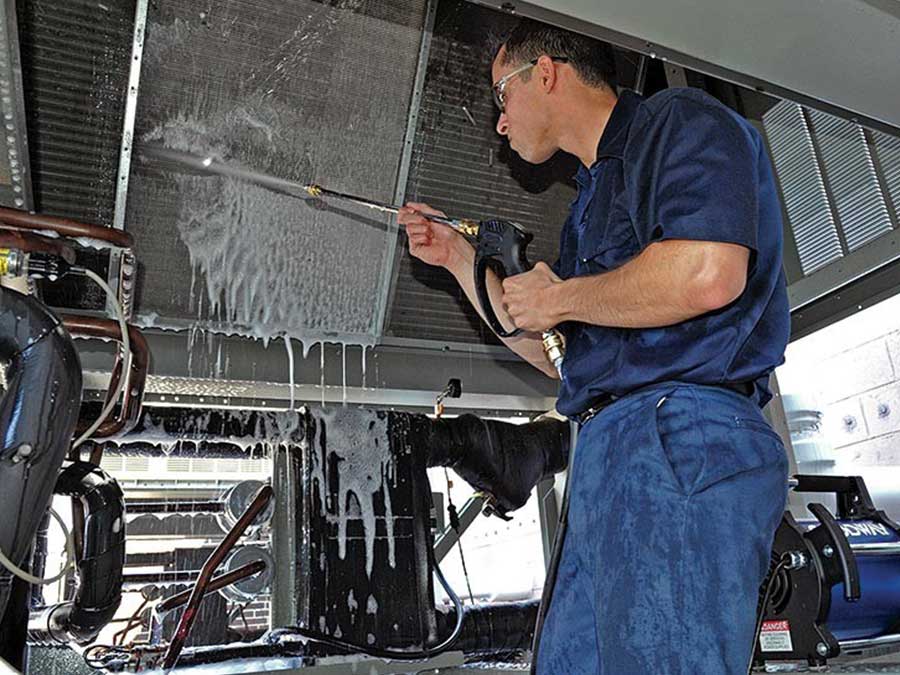
Before and after comparison of cleaned commercial HVAC coils
Benefits

Why Coil Cleaning Pays for Itself

Clean coils use less energy, last longer, and maintain proper temperatures. The ROI is measurable.

Significant Energy Savings

Significant Energy Savings

Dirty coils reduce efficiency by 20-30%. Your compressor runs longer cycles and works harder to achieve the same cooling. Clean coils restore heat transfer efficiency—many customers see 15-25% reduction in HVAC energy costs after professional cleaning.

  • 15-25% typical energy savings
  • Faster cooling cycles
Extended Equipment Life

Extended Equipment Life

Dirty coils strain compressors. The system runs hotter and works harder, leading to premature failure. Clean coils reduce compressor load and can extend equipment life by 5-10 years—delaying expensive replacements.

  • Reduced compressor strain
  • Fewer emergency breakdowns
Better Temperature Control

Better Temperature Control

Dirty coils can't maintain designed temperatures. Walk-ins run warm. Air conditioning struggles. Clean coils restore full cooling capacity—critical for food safety in commercial kitchens.

  • Consistent temperatures
  • Food safety compliance
Improved Air Quality

Improved Air Quality

Dirty evaporator coils can harbor mold, bacteria, and allergens. Every time your system runs, it circulates air across those coils. Professional cleaning removes biological contamination—improving indoor air quality.

  • Remove mold and bacteria
  • Reduce musty odors
How We Work

Our Coil Cleaning Process

Thorough cleaning that restores efficiency without damaging delicate coil fins.
Our cleaning process

5

Steps

01

Equipment Assessment

We inspect coils to determine contamination level, check for damage, and select the appropriate cleaning method for each coil type.

02

System Preparation

We protect adjacent components, ensure proper drainage, and prepare the work area. For evaporator coils, we coordinate with refrigeration cycles.

03

Chemical Treatment

Specialized coil cleaners break down grease, biological growth, and debris. We select alkaline, acidic, or neutral cleaners based on coil material and soil type.

04

Careful Cleaning

Low-pressure washing removes contamination without damaging fins. We clean both coil faces and flush contamination completely through.

05

Fin Restoration

Bent or crushed fins restrict airflow. We straighten damaged fins using appropriate tools—restoring designed airflow through the coil.

FAQ

Common Questions

Commercial kitchen environments require more frequent cleaning than typical commercial spaces. We recommend annual cleaning minimum for most kitchen HVAC—quarterly for rooftop units in heavy grease environments. Walk-in and refrigeration coils should be cleaned every 3-6 months depending on location and exposure.
Individual coil cleaning typically runs $150-$400 depending on size, accessibility, and condition. Complete HVAC system coil cleaning, including rooftop condenser and indoor evaporator coils, ranges from $400-$1,000. Walk-in coil cleaning runs $100-$250 per unit. We provide itemized quotes for your specific equipment.
Studies show dirty coils reduce efficiency by 20-30%. After professional cleaning, most facilities see 15-25% reduction in HVAC cooling costs. For a typical restaurant spending $1,500/month on cooling, that's $225-$375 monthly savings. The cleaning typically pays for itself within 1-2 months.
Yes—dirty coils are a leading cause of premature compressor failure. When coils can't transfer heat efficiently, the compressor works harder and runs hotter. This leads to overheating, tripped breakers, and eventual compressor burnout. A $300 coil cleaning can prevent a $3,000-$10,000 compressor replacement.
Condenser coils release heat—they're typically outside (rooftop units) and get dirty from airborne debris. Evaporator coils absorb heat—they're inside the air handler or walk-in and collect grease, dust, and biological growth from indoor air. Both need regular cleaning but face different contamination types.
Yes. Walk-in evaporator coil cleaning is essential for food safety and energy efficiency. We clean the evaporator coil, fan blades, and drain pan. For freezers, we coordinate with defrost cycles to access coils safely. Regular cleaning prevents ice buildup and maintains proper temperatures.
Often, yes. Dirty evaporator coils are one of the most common causes of temperature problems in walk-ins. When coils can't transfer heat efficiently, the unit runs constantly but can't reach target temperature. Coil cleaning frequently resolves this without expensive repairs.
Not when done correctly. We use low-pressure techniques and appropriate chemicals for each coil type. Amateur cleaning with high-pressure washers or harsh chemicals can damage fins and coatings. Our technicians are trained in proper coil cleaning methods that restore efficiency without causing damage.
Individual coils take 30-60 minutes depending on size and condition. Complete HVAC system cleaning (condenser plus evaporator) typically takes 2-3 hours. Walk-in coil cleaning runs 30-45 minutes per unit. We can often clean multiple units in a single service visit for efficiency.
We don't recommend it. High-pressure water bends fins and pushes debris deeper into coils. Garden hoses don't provide adequate pressure to remove grease. Commercial coils in kitchen environments need professional cleaning with appropriate chemicals and techniques to restore proper efficiency.
Yes. Ice machine condenser coils are critical for ice production. Dirty coils reduce ice output and increase energy use. We clean condenser coils as part of ice machine maintenance—often combined with bin cleaning and sanitization for complete ice machine service.
Indirectly, yes. When condenser coils are dirty, the ice machine works harder and produces ice more slowly. This can lead to warmer-than-optimal freezing, which produces cloudy ice that melts faster. Clean coils support proper ice machine operation and better ice quality.

Service Areas

Serving the Greater Toronto Area and Ontario

Paying Too Much for Cooling?

Dirty coils cost you money every month. Get a free quote for professional coil cleaning.

Ready to keep your kitchen safe and inspection-ready?

Ontario Hood Cleaning gives quick quotes, NFPA 96 documentation, and Ontario-wide response.